Handyman and Property Care on Brown Island
Brown Island sits in Friday Harbor, a few hundred yards off the town I live in. Of all the boat-access islands, this is the one I can serve most easily.
- Licensed & bonded
- WA L&I #SANJUJI741OT
- Insured
- Locally owned in Friday Harbor
The shortest crossing I make
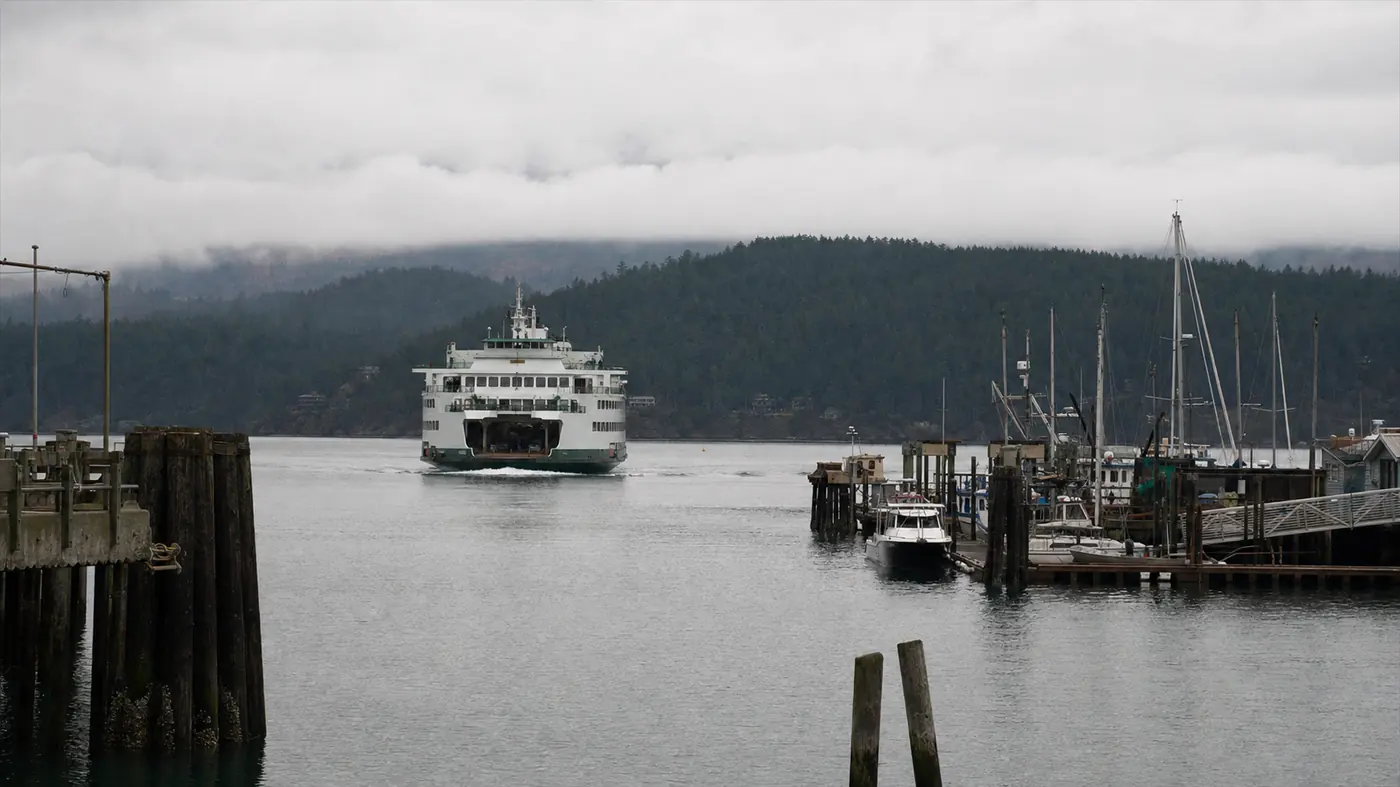
Brown Island lies just off the east side of the town of Friday Harbor, in the harbor itself. It is about half a nautical mile from the waterfront — a five-minute run in my skiff and visible from the ferry line. I live and work in Friday Harbor, my suppliers are here, and Brown is the one island where the boat trip is shorter than the drive across San Juan.
That matters more than it sounds. On every other island on this list, a meaningful share of the day goes into travel, staging, and carrying. On Brown, the crossing is minutes and the community has a moorage facility, so almost the whole boat day turns into work on your house. If you are comparing what a day buys you across the outer islands, Brown buys the most.
The island is about 70 acres, private, developed in the 1960s by a group of limited partners with a deliberately light hand, and run by its homeowners association. Amenities include community moorage, a pool and clubhouse, and full-time caretakers. There are no private cars: transport on the island is golf carts, with the exception of the fire truck and a utility truck. So while the crossing is trivial, the carry from the dock to your house is still a cart or a hand truck, and my material limits still apply.
Mature trees, protected shoreline, waterfront houses
Brown's founders wrote in their own environmental restrictions, including limits on cutting trees, and the island kept its canopy as a result. More recently, owners on the island took out an old bulkhead and restored a stretch of upper beach with sand and gravel, a project that says a good deal about how the place is managed.
For a maintenance list, mature trees over waterfront houses is a specific combination. The gutters fill with needles and small debris continuously, not seasonally, and on a house with a complicated roofline that means overflow at the valleys and the inside corners where fascia damage starts. Moss establishes on the shaded slopes. Decks and rails, of which there are many here because every house is looking at water, stay damp under the canopy and lose fasteners. Meanwhile the harbor side of each house still gets salt air, wake spray on the lowest structures, and the corrosion that goes with it.
Because Brown houses are close to town and often used more than a remote cabin would be, the interior work list is also longer here than on the far islands: shelving, mounted screens and televisions, hardware, closet and door adjustments, the small things that accumulate in a house that gets used in bursts. Gutters and moss plus a stack of small interior jobs is a very typical Brown Island day.
Forty-seven houses, seven of them year-round
The San Juan County comprehensive plan appendix lists about 47 dwelling units on Brown against 7 occupied year-round and a population near 14. Those are planning figures, 2000 census occupancy with a 2005 unit count, and the most recent per-island public data rather than a current census. The island does have full-time caretakers, which is more coverage than most outer islands get, but that is island management rather than house-by-house attention.
Being three minutes from town cuts both ways. It makes an owner feel like the house is basically in Friday Harbor, so the ordinary discipline of closing up a seasonal house sometimes slips. And it means when something does go wrong, the fix is quick and cheap if anybody notices in time. Nobody notices from the mainland.
That is why property care is worth more here than the short distance suggests. Brown is the island where a monthly check is genuinely inexpensive to deliver, and where I can respond quickly if a caretaker or a neighbor flags something. For an owner who is away most of the year, that is close to the ideal arrangement.
What I can bring across
My boat is a 16-foot skiff. It carries me, my tools, and small materials, and 20 feet is the honest ceiling on board length. The five-minute crossing does not raise that ceiling — a 16-foot boat is still a 16-foot boat, and there are no cars on the island to move a load once it lands. So: tools, hardware, fasteners, trim, paint, screen stock, a modest bundle of boards, and interior fittings, yes. Sheet goods in quantity, a decking package, appliances, windows and doors in bulk, or a volume of debris going out, no — those go on a barge to the island's moorage and I work off the delivered material. The short crossing does mean that if I have forgotten something, the trip back to town costs minutes rather than an hour, which is a real advantage on a punch-list day.
Rates are on the pricing page. The all-in boat day is the same flat number on Brown as it is on Stuart; the difference is how much of it goes into your house.
Questions I get about Brown
Is Brown Island cheaper to serve than the far islands?
The boat day rate is the same flat number everywhere. What differs is value: the crossing to Brown takes minutes, so nearly the whole day goes into your house rather than into travel.
How does material move once it is on the island?
By golf cart or hand truck. Brown has no private cars, so the carry from the moorage is part of the job and shapes what can be brought over in a day.
The island has caretakers. Do I still need home watch?
The caretakers look after the island and its common facilities. Home watch is your specific house, on a schedule, with photographs and someone who can fix what turns up.
Next step
Work waiting on Brown?
Send me the list and where I land, and I’ll quote the boat day before anything is booked. Call (360) 317-0203.
Related