Storm Prep & Post-Storm Cleanup, San Juan Island
The islands get real wind. Two hours before a forecast southeaster is the cheapest work I do.
- Licensed & bonded
- WA L&I #SANJUJI741OT
- Insured
- Locally owned in Friday Harbor
People who move here from Seattle underestimate island wind for about one winter. We are not in a rain shadow when it comes to weather off the water, and the fall and winter southeasters that come up the strait arrive with nothing in front of them. Add exposed bluff lots, second-growth fir with shallow root plates in saturated ground, and a lot of houses built with long unsupported runs of trim and flashing, and a single overnight blow reliably produces the same short list of damage across the island.
Prep is the half of this worth paying for. Once the wind is up, everything anybody can do is more expensive. Before a forecast blow, the work is unglamorous and fast: gutters and downspouts cleared so the roof can actually shed a two-inch rain event instead of pushing it over the fascia, loose flashing and drip edge re-secured, trim boards and soffit panels that have worked loose refastened, ridge and gable vents checked, outdoor furniture and umbrellas either stowed or lashed, deck boxes and grill covers secured, gates latched and shed doors pinned, planters and anything else on an exposed deck moved to the lee side. Loose objects on a deck above the water are the reason a lot of windows break out here, and they break from the inside of your own property, not from anything the storm brought with it.
For a second home the prep visit is also a walk-around with photographs while everything is still intact. That matters later. An insurer looking at a claim in February is much easier to deal with when you can show what the roof edge and the deck looked like in October.
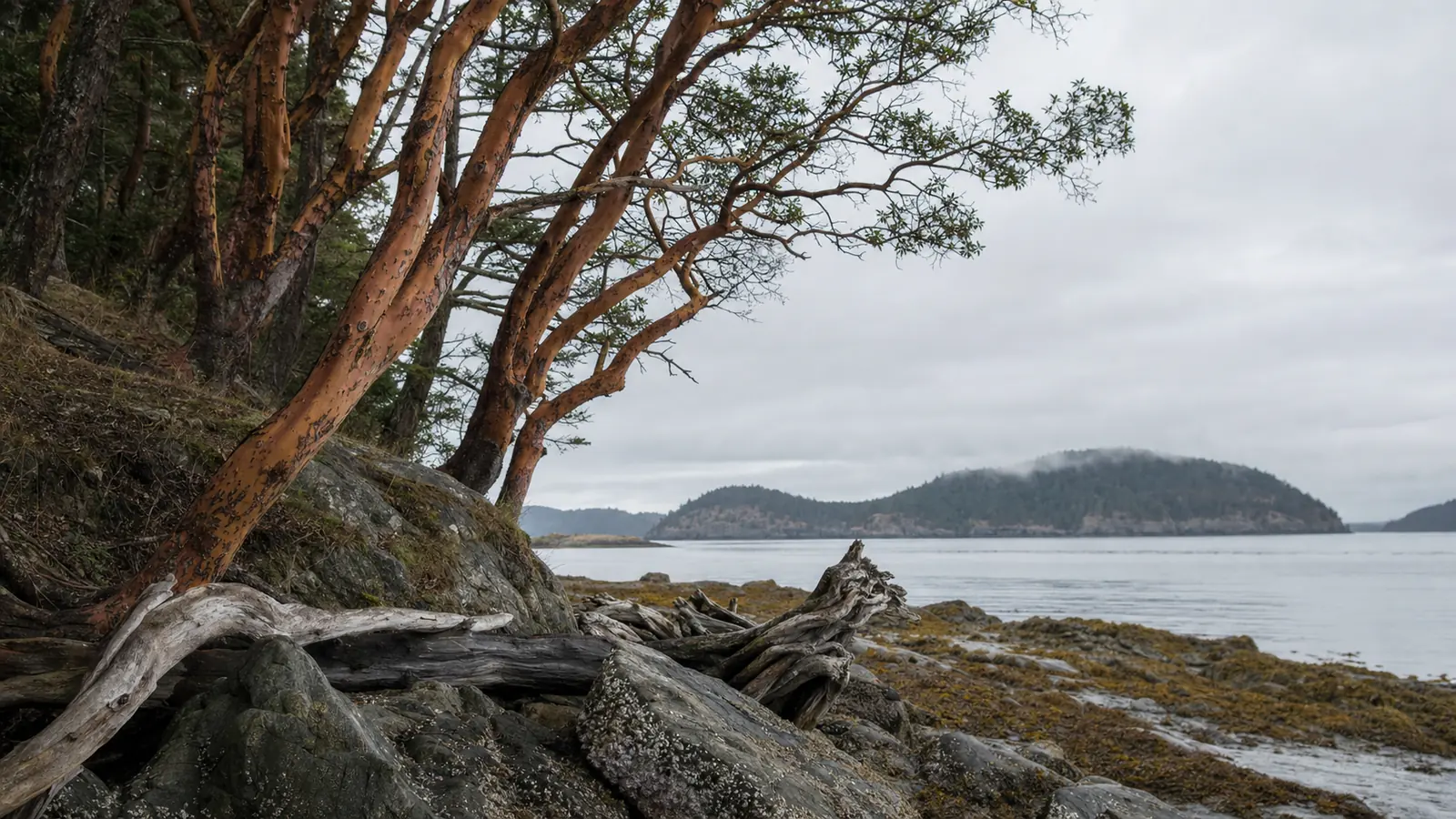
After a storm, the first job is an honest assessment rather than a cleanup crew. I walk the property, photograph everything, and send you a set with a plain written note: what came down, what it hit, what is compromised, what is only cosmetic, and what needs a specialist. Typical findings on this island are gutters torn loose or overflowing at a joint, a section of drip edge or flashing lifted, trim and fascia damage, a few shingles or shakes gone from the windward slope, screens blown out, a fence panel down, a gate off a hinge, and a great deal of fir and cedar litter plus madrona limbs across the drive, the deck, and the roof.
Cleanup is limb and litter removal by hand, off roofs, out of gutters, and off decks and walkways, plus the repairs that are genuinely handyman scale — refastening trim, re-securing gutter hangers, resetting a fence panel, putting a gate back on, replacing a screen, and boarding an opening temporarily if something is actually open to the weather.
What I do not do is tree work. No felling, no climbing, no chainsaw work on standing or hung-up timber, nothing under tension, and nothing involving a limb resting on a structure or anywhere near a power line. That is a tree service with the right insurance and the right rigging, and on this island there are people who do it well. If a fir came down on your roof, the sequence is: I document it, I get a tree service and a roofer moving, and I handle everything they leave behind. Being clear about that line is why I get called for the other ninety percent.
Roof replacement, structural repair, and anything electrical or plumbing that a storm exposed all go the same way — a licensed contractor in the right trade, coordinated by me, with me meeting them at the house so you are not managing a project by phone from off-island.
The realistic version of storm response out here is that after a big blow everyone calls at once and the ferries are the least of the problem. Owners on a property care plan get looked at first, because I already have the keys, the codes, and a photo baseline of the property from the last visit. That is not a sales line, it is just how the day after a storm actually gets triaged.
What’s included
- Pre-storm gutter and downspout clearing so the roof can shed the water
- Re-securing loose flashing, drip edge, trim, fascia, and soffit panels
- Securing or stowing outdoor furniture, umbrellas, planters, and covers
- Latching gates, pinning shed and outbuilding doors, checking crawlspace access covers
- Pre-storm photo baseline of the exterior
- Post-storm walkthrough with photographs and a written damage note
- Hand removal of branch litter and needle drop from roofs, gutters, decks, and drives
- Screen, trim, gutter hanger, fence panel, and gate repairs
- Temporary weather-tight closure of an opening until the right trade arrives
- Coordination with a tree service, roofer, or licensed contractor where the damage calls for one
What it costs
Prep visits are usually inside the $250 minimum, which covers two hours. Post-storm assessment and cleanup runs $250 minimum then $85/hour in quarter-hour increments, because nobody can quote storm damage before seeing it. Washington sales tax applies to the total. Rates here.
I do not charge a storm premium or an emergency rate. Same hourly, and the honest constraint is scheduling rather than price — after a real blow I am booked deep and I prioritize property care clients first.
Ferry islands run on scheduled island days at $595 half day and $995 full day; a dedicated trip after a storm is the day rate plus $400. Outer islands are a $1,295 boat day, and after a storm the water decides the date, not the calendar.
Full rate cardCommon questions
Can you take a tree off my roof?
No. Felling, climbing, cutting anything under tension, and working near power lines is tree service work with its own insurance and rigging. I’ll photograph it, get a tree service moving, and handle the trim, gutter, and screen repairs afterward.
How much notice do you need before a storm?
Two or three days is comfortable. When a serious system is on the forecast I get a run of calls at once, so earlier is better than the morning of.
Will your photos work for an insurance claim?
They’re what adjusters ask for: dated wide shots, the specific damage close in, and a written note of what I found. Whether a claim pays is between you and your insurer, but you’ll have the documentation.
I’m off-island and the power’s out. Can you check the house?
Yes, and that’s a common call. I’ll walk it, photograph it, clear what needs clearing, and tell you straight whether it needs you on a ferry.
Photo: Fir and madrona litter across a deck and gutter after a blow, before cleanup. Overcast, wet, honest.
Pair it with the after shot from the same corner.
Next step
Want this off your list?
Call (360) 317-0203 or send the details and I’ll tell you what it takes.
Related