Blinds, Shades & Window Treatments on San Juan Island
The measuring is the job. Getting a shade wrong here means a two-week round trip, not a return desk.
- Licensed & bonded
- WA L&I #SANJUJI741OT
- Insured
- Locally owned in Friday Harbor
Window treatments look like the simplest install on this list and are the one where mistakes are most expensive, because almost nothing is stocked on-island in the size you need. If a shade is a half inch wide, you are not driving it back to the store. You are boxing it, putting it on a truck or the ferry, and waiting. So I measure before anything is ordered, and I measure the way that catches the problems.
Island openings are frequently out of square. Houses built in the 1960s and 1970s on post-and-pier foundations settle, and a window opening that started square can be a quarter to a half inch narrower at the bottom than the top fifty years later. I take the width at three heights and the height at three widths, work from the smallest measurement for an inside mount, and check the head jamb for depth before assuming an inside mount is possible at all. Where an opening is too far out of square for an inside mount to look right, an outside mount on the trim is usually the better answer, and I will say so before you order rather than after.
The other constraint people forget is what the head jamb is made of. Aluminum-clad window heads, metal-flanged vinyl replacement windows, and old plaster returns all take a different fastener than a wood jamb, and none of them like a screw driven into the wrong spot. On a fiberglass or vinyl frame the bracket generally belongs on the trim or the wood surround, not through the frame flange. On plaster it needs a pilot hole and patience.
Then there is the reason people buy shades here in the first place, which usually is not decoration. West and southwest rooms above Haro Strait take hard afternoon light with water glare underneath it, and they cook. A room like that wants a solar screen shade with a real openness factor chosen for the view you want to keep, not a blackout panel that turns a water view into a wall. On the sleeping side, June daylight out here runs past nine-thirty at night, which is charming for a week and then becomes the reason your guests and your renters do not sleep. Blackout roller shades with side channels or a generous outside mount are the fix, and for a nightly-rental bedroom they pay for themselves in reviews.
Cellular shades do real thermal work on the old single-pane and early aluminum-framed windows that are still in a lot of island houses. They are not a substitute for a replacement window, but a cell shade with a snug side gap noticeably changes how a room feels in a February southerly, and it is a fraction of the cost. One caution I give every time: old aluminum frames sweat heavily in winter, and a shade that touches a wet frame will wick, stain, and eventually mildew. Mount it with clearance and expect to wipe the sill.
Hardware choice is a salt-air decision on any window that faces water. Painted steel headrails, cheap plated cord locks, and mild steel brackets will pit and seize within a couple of seasons in a house half a mile from the beach with the windows open all summer. Aluminum, coated, or stainless components hold up. I would rather install one good shade in a hard-weather room than three that need replacing in three years.
Cords are the last thing worth knowing. Stock window coverings sold now are cordless, short-cord, or inaccessible by the current industry safety standard, and if you have older blinds in a house with grandchildren or renters in it, the looped cords on them are the single most worthwhile thing to swap out on this whole page. Cordless lift, continuous-loop with a tensioner properly fastened to the jamb, or a wand are all better answers than a hanging loop.
One boundary: hardwired motorized shades and any treatment that needs a transformer wired into the building are electrical work, and Washington requires an electrical contractor license for that. I hold a general contractor registration, not an electrical license, so I do not do it and I will not advertise it. Battery and rechargeable-motor roller shades that need no wiring, I will happily hang and program.
What’s included
- On-site measuring for inside and outside mounts, including out-of-square openings
- Blinds, roller shades, cellular shades, roman shades, and solar screens
- Blackout treatments and side channels for bedrooms and nightly rentals
- Drapery rods, brackets, returns, and hold-backs mounted into framing
- Bracket mounting appropriate to wood, plaster, vinyl, or clad jambs
- Cord safety retrofits and replacement of looped-cord blinds
- Battery-powered roller shades installed and programmed (no wiring)
- Old blinds removed and holes filled
What it costs
$250 minimum visit covering two hours, then $85/hour. A measuring visit and an install visit on the same set of windows are two trips, so where it makes sense I will measure while I am there for something else. Shades are ordered at cost plus pickup or freight. Full pricing here.
Most whole-house orders install in a half day once the boxes are on-island. If you are also having furniture built or art hung, put it in the same visit.
Full rate cardCommon questions
Can I order the blinds myself?
Yes, and plenty of people do. Have me measure first. The most common failure I see is a set of made-to-order shades ordered from the width of the old ones, which were themselves cut wrong.
My windows are not square. Can they still take inside-mount shades?
Often, within about a quarter inch. Past that the light gaps on one side start to look like a mistake, and an outside mount on the trim is the better-looking answer. I will measure and tell you which one you are.
Do you install motorized shades?
Battery-powered and rechargeable ones, yes. Anything that needs wiring or a hardwired transformer requires a Washington electrical contractor license, which I do not hold. I will line up a licensed electrician for that part and hang the shades once the power is in.
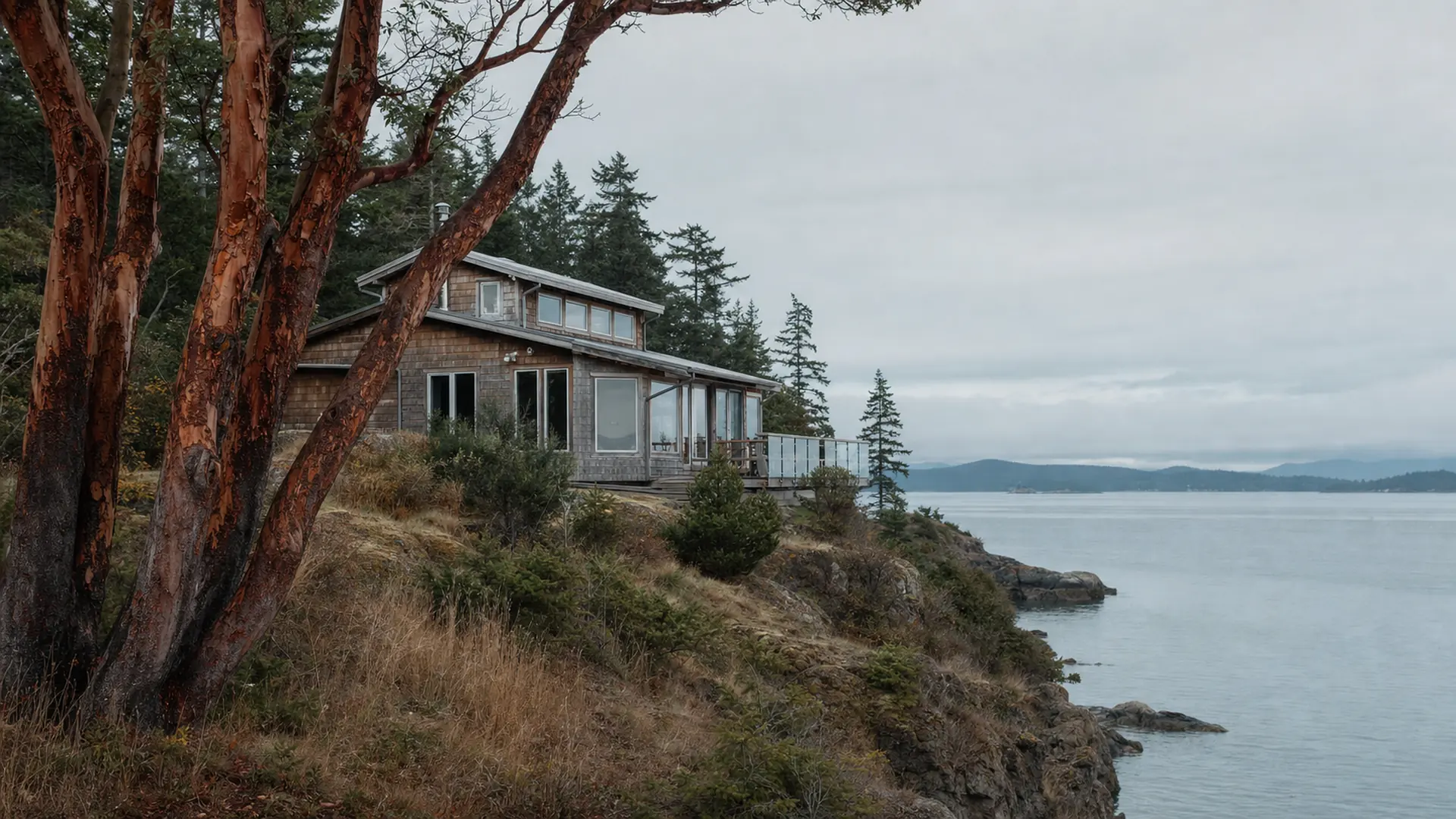
Photo: A measuring tape stretched across a window opening with the head jamb in frame, water view beyond.
Shot list item 3. The measurement is the story on this page.
Next step
Want this off your list?
Call (360) 317-0203 or send the details and I’ll tell you what it takes.
Related